Showing posts with label graphic novels. Show all posts

Sunday, March 6, 2011

Mother and Daughter Book Review: The Secret Science Alliance and the Copy Cat Crook.


Note:  This is our second Mother/Daughter book review, and we are still trying to get the podcast up!  So please enjoy another week of the transcript! 

Me:  Hi Everybody, This is Merideth

Mari:  And this is Mari

Me: And we are going to do our second Mother Daughter Book Review.  This week we’re going to review The Secret Science Alliance and the Copy Cat Crook by Eleanor Davis.  
Mari, how would you describe this book to somebody in just a few sentences if you wanted to get them to read it?

Mari:  Fun, but cluttered artwork.

Me:  I would say it’s a fun, but a little predictable story, with bright colored, but slightly cluttered art.  I agree with you about that.

Mari: It’s about a boy named Julian, who was a nerd at his old school, but he and his parents have to move.  He decides he won’t be a nerd at his new school, but he can’t help it.  Then at school there’s this “crazy” girl named Greta and a “dumb” jock named Ben, and it turns out that they’re both science geeks.   And there’s this scientist named Dr. Stringer, who in my experience, is kind of stuck up, and in the end he plays a very important part.

Me: So, they’re all three science geeks and they don’t want anybody to know it?

Mari:  Well, not a lot of people know, except Greta’s dad, who’s a museum owner (important!).  They don’t want their parents getting in their way! 

Me:  So they form a secret society of scientists, huh?  That’s pretty cool.  What did you really like about this book?

Mari:  They were nerds.


Me:  You liked the fact that they were nerdy?


Mari:  (Sings) “White and nerdy!”


Me:  But they’re not all white are they?  Greta’s an African-American girl and Ben looks like he might be Hispanic?


Mari:  I was singing a Weird Al song (sings) “White and Nerdy!  Look at me I’m white and nerdy!”


Me: Oh.  So you liked the fact that the characters were geeky?


Mari:  Geeks rule! 


Me: Anything else you like?


Mari:  (sigh) The way she draws, but not how she placed it.  I like how the characters didn’t look real, but also they weren’t stick figures without mouths or noses.   But, I thought there was too much stuff on the pages, and it looked cluttered.

Me:  So you thought the characters were not too realistic but not too cartoony either?

Mari:  Yes. 

Me
: Anything else you liked about the story?

Mari:  I liked that it was an adventure!  The kids got to do cool things! 

Me:  I liked Greta!  I liked that she was spunky and smart.

Mari: I Liked her too.  I liked her helmet, and that she wasn’t a super girly girl.  Because I’m not always a girly girl (sings) “pink and princess, rainbows and carousels, la la la la la”

Me:  And I felt really sorry for Ben, because he thinks he’s stupid but he’s not.

Mari:  I know!  He just isn’t good at tests.  I think teachers should come up with a different way to find kids’ scores, not just tests.  Because some people get really nervous during tests.  Maybe they could just nonchalantly ask some questions in a conversation, instead of watching you like a sparrow! 

Me:   So, you mentioned that you didn’t like how cluttered some of the artwork was. I would agree with you, I think that some of what librarians like me would call the panel layout was off.  You know, the way the artwork was arranged on the page, there was too much going on, and you didn’t know where to look.

Mari: I would have to agree.

Me:  I also noticed that in some places it’s a very wordy comic.  There’s lots of text.   Lots and lots and lots of words.

Mari:  Yeah, in some places there’s more bubbles than art.

Me: And as much as I like the story, it didn’t really surprise me.

Mari:  Yeah, it was kind of predictable.

Me:  Now I would say this would be a really good book for school age kids.  Kids in 2nd grade up through 6th.  Who would you give it to?

Mari:  Hmmmmmm… ages 8-12 I think.  Not middle school or high school. 

Me:  Well, thank you for reviewing another book with me, maybe next week we’ll review something you pick.

Mari: (evil laugh) Ooooo!  I’ll pick something you won’t like!   

Wednesday, March 2, 2011

Unwritten: Tommy Taylor and the Bogus Identity by Mike Carey and Peter Gross

What You Need to Know:  This is a clever, violent take on the power of story that will frustrate readers who want to know more.

Summary:  Tom Taylor's father was the creator of a beloved fantasy book series.  Wilson Taylor's boy wizard was named Tommy Taylor, and Tom (the man) now lives in the shadow of Tommy (the fictional boy).  When scandal erupts around Tom and his missing father, he goes looking for answers, and finds violence and secrets.

What Works:  Carey is a hell of a writer, and he is on familiar ground here, where the fantastic and the mundane meet.   I was impressed by the strong characterizations on display here.  Tom is an jerk,  but understandably since his "fame" has him trapped.  I also liked the character of Lizzie Hexam, mostly because she reminded me of Thessaly one of my favorite characters of all time. The art works well for the story, being realistic but not overly detailed.  The colorists, Chris Chuckry and Jeanne McGee deserve credit, as the use of shadow in this book is really striking.  

For me, the strongest part of the book is not Tom's story, but the piece at the end "How the Whale Became" detailing Rudyard Kipling's interactions with the same shadowy group who seems to be targeting Tom.  Beautifully written and drawn, this segment really lets letterer Todd Klein shine, as the text, and how it's presented is integral to the story.

What Didn't:  Mostly, this book suffers from being the first in the series.  It has "when are we going to get to the fireworks factory"  syndrome.  I want to know more.  What happened to Tom's dad?  Who are the shadowy figures commanding the killer who shows up in the last act?  What does Lizzie have to do with any of this?  They'll probably tell me in the next book.  While I will continue reading, it was frustrating not to get more answers.

Also, while the art in this book is well done, it pales in comparison to Yuko Shimizu's original series covers, also included here.  Shimizu's artwork is breathtaking, detailed and exquisitely covered.

However:  I know the reasoning behind having a different cover artist.  I just don't like it.

Who Would I Give this Book To:  Given the large amounts of violence and cursing on display here, this is definitely an older teen/adult title.   Harry Potter fans who are ready to move on to more mature books, people who like a modern horror story and fans of long arc fantasy fiction are the most likely to enjoy this book.

Also Note:  The Magicians by Lev Grossman would be an interesting paring with this book, as both involve young men figuring out that the worlds they've always assumed are fictional are actually real.

Saturday, February 26, 2011

Mother and Daughter Book Review: Hereville: How Mirka Got Her Sword

I'd like to introduce a new feature on the Merideth Says blog: Mother and Daughter Book Reviews. 

My daughter Mari is 9 years old, and a 3rd grade student.  She is very interested in this reviewing thing that eats up so much of Mom's time, and wants to try it.  So, here is our first joint review, of Hereville: How Mirka Got Her Sword by Barry Deutsch.  

Note: Mari and I tried to record this as a podcast, but had some technical issues, so for this one, we just have the transcript! 

Me:  O.K. -- it's our first book review together, and we're going to talk about Hereville: How Mirka Got Her Sword. So, if you had to describe this book in just a few sentences, how would you? 

Mari:  It was amazing and the artwork was wonderful.  It had a good storyline and I liked how she produced it.  

Me:  I would say it was a good adventure story with an unusual lead character and setting.   Can you tell me what the book was about? 

Mari:  It's about an Orthodox Jewish girl named Mirka, who has a stepsister named Rachel, and an older sister named Gittel, who is always talking about getting married, and she has a little brother.  They live in Hereville.  One day, Mirka sees a woman floating, cutting wood, and she takes her friends to see her.  When they're there, she eats a grape and a big pig chases her.  The pig won't leave her alone until she ropes it and rides it underwater.  Then she saves the pig from bullies so the witch tells her where to find a wonderful sword as a reward.  

Me:  Why does Mirka want a sword?

Mari: Mirka dreams about fighting dragons.  She has a book of monsters, which isn't a Jewish book, and she's not supposed to have it.   She needs the sword to fight. 

Me:  Well, that makes sense.  What did you like best about this book? 

Mari:  Well, that's hard!  There are three things:  the artwork, the storyline, and her stepmother.   I liked the artwork because it was realistic without being like "oh, this line is two millimeters too long, arghghghghg!"  and it wasn't "oh, I'm sorry that I didn't draw noses or mouths on anybody".  It was the perfect balance.  My goal when I grow up is to be a comics artist and win an Eisner award, so I always look at the art first.  

Me:  I liked the artwork too, but I thought that it was a little distracting because some of the closeups were more realistic than the far away scenes.  

Mari:  That's bad? 

Me:  No, but it did take me out of the story a little bit.  What did you like about the story. 

Mari:  I liked Mirka!  I liked that she was "spunky" but not "grrr...kill kill kill".  I liked that she was a Jewish girl, because my dad is Jewish, and you don't see many Jewish girls in fantasy books. 

Me:  I liked that she was Jewish too, and a Orthodox Jew at that. It was interesting to see a different way of life.  But she had to break some rules to have her adventures though, didn't she? 

Mari:  Oh, yeah.
Me:  You said that you liked her stepmother, why?

Mari:  Well, she was argumentative, feisty and liked to fight.  She's just like me!  

Me: I have some things in common with the stepmother too.  I think she was my favorite character.  Is there anything you didn't like about this book, or thought the book could have done better? 

Mari: No, not really.  It was pretty close to perfect.  There's just one thing. The witch didn't really look like a witch, I liked that she didn't look cheesy, like a Halloween witch, but she really just looked like a creepy old lady. 

Me:  I don't think I would change anything either.  I do wish it had been in color, because I think it would attract more readers, but I think the kind of brown, sepia tones work for Mirka's kind of old fashioned way of life.   So, who would you give this book to? 

Mari:  I would give it to kids my age, mostly girls, but boys too.  Boys need to read about spunky girls.  I would give it to people who like fantasy books.  

Me:  I think it's a good book for grade school kids, but I also think it would be a good book for adults too.  Maybe even adults who don't know much about comics. 

Mari:  That's a great idea!  Because comics are good books.  A lot of grownups don't realize that.  

Me:  Yes, comics are good books.  And a lot of grownups don't understand that.  Maybe we should talk about that next time.  Are we going to do this again? 

Mari:  Hopefully.  

Wednesday, February 16, 2011

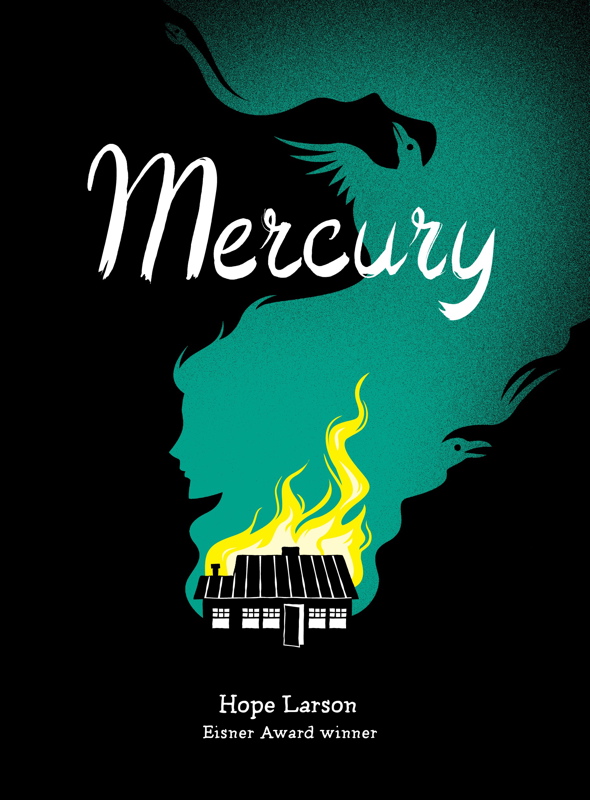
Mercury by Hope Larson

What You Need to Know: This is a beautifully drawn, historical romance with a modern twist, that might be a hard sell for some teens.

Summary:  Tara is returning to school, following a fire that destroyed her home, a family farm, forcing her (odd) mother to move away for work.  A strange necklace found in a box unwittingly connects her to Josie, a distant relative of Tara's from 1859.  Josie lives on the same farm, and like Tara, watches over her high-strung mother.  A stranger finds gold on the family farm, but can he be trusted with the gold, much less Josie's heart?  And, hundreds of years later, how can Tara keep her mother from uprooting her and loosing their heritage? 

What Worked: Larson is an amazing artist, and this black and white novel is beautifully illustrated, with expressive characters and a quiet charisma.  Josie's love story is charmingly told, bittersweet and poignant.  Larson also does a great job of involving you in Josie's story -- you desperately want everything to work out for her.  This book also has one of the most arresting and unique covers that I have ever seen.  It becomes more and more interesting the longer that you look at it.  

What Didn't:  Larson counts on the parallel structure to do a lot of heavy lifting for her.  We don't ever see Tara's mom, she's just a voice on the phone, and an offhand comment from others.  We see a lot of Josie's mother though, and can extrapolate from there about Tara's mom.  I admire an author who trusts her audience enough to let them connect the dots; however, I'm not sure that it worked as well as it could have.  Tara's romance is a little more obtuse, and didn't add much to the story.  Also, the more overt supernatural elements in this book -- such as the animal spirits --  felt slightly out of place, and a little tacked on.  

However: My tolerance for supernatural flourishes is very low.  Your mileage may vary.  

Who Would I Give This Book To?  Teens looking for a different sort of paranormal romance, and those who like their historical fiction with a twist. 

Tuesday, February 15, 2011

Return of the Dapper Men by Jim McCann and Janet Lee.

What You Need to Know:  This is a beautifully produced, magnificently illustrated graphic novel, that suffers slightly from an obtuse story. 


Summary:  In Andorev, where there is no time, robots live above ground, tending tasks that have lost their meaning.  Children live underground, constantly creating, never asking why.  The robots and the children do not mingle, except for Zoe, a silent girl robot and Ayden, a boy child who asks questions even if there are no answers.

Andorev changes forever with the appearance of the Dapper Men, 314 nattily dressed gentlemen who fall from the sky.  One of the Dapper Men, 41, finds Ayden and Zoe, and shows them what they have forgotten.  


What Works:  This book is breathtaking.  Lee's artwork is spectacular, combining hand coloring with decoupage to create a surreal, intricate landscape inhabited by distinct but similar characters.  Archaia has given this book the deluxe hardcover treatment, and the oversized hardcover does justice to the high caliber artwork on display. 


What Doesn't:  McCann, best known as a superhero writer, is attempting to tell a mythic fable here, and doesn't quite achieve it.  The motives of the Dapper Men, what happened to Andorev, the history of the children and robots are more implied than told.  As a result, this fairy tale story of lost time and eternal children will resonate more with adults than with children, making this an all ages title that most kids will struggle with. 


However:  Adults will adore this volume, it is unique in the graphic novel category, and a good example of an independent graphic novel.  


Who Would I Give This Book Too:  Art lovers, adults, fellow librarians.  


Wednesday, February 2, 2011

Yummy: The Last Days of a Southside Shorty by G. Neri and Rand DuBurke

What You Need To Know:  This is a fictionalized account of the life (and death) of Robert Sandifer, an 11 year old gang member who shot and killed a neighborhood girl. Although it is beautifully done, this book may struggle to find an audience.

Summary:  Yummy is an 11 year old felon.  A member of the Black Disciples Nation, in the Roseland neighborhood of Chicago, he is well known for stealing cars, strong arming kids for money and having something to prove.  However, he is also known for his love of sweets, his short stature and good manners.  Roger, another 11 year old, tries to unravel the dual nature of this boy after he accidentally kills a 14 year old girl.  While Yummy's gang hides him, Roger listens to the words of his friends, his family, those who knew Yummy, and those who only know him as a symbol or statistic

What Works: This is a powerful story.  The DuBurke's stark black and white artwork manages to convey that power without melodrama.  Neri works hard to give a complete picture of Yummy, a dangerous felon who was still a child.

What Doesn't:  I have some serious questions about the intended audience for this book.  Is it meant for teens?  If so, the choice of a young narrator may turn off readers.  Also, while Yummy's story is indeed powerful, it also happened before most teen readers were born.  Dated slang, dress and cultural references will serve to remove teens from the story.   I can't quite see a younger reader enjoying or understanding this volume, and I think the format will be enough to turn off most adults.  So while the book is arresting and moving, I'm not sure it will reach the intended recipients.

However:  I am a 30+ white girl living in a suburb. While I can't see many of my patrons picking this title up of their own accord, that could be different in a different library.

Who Would I Give This Book To?:  Fans of Walter Dean Myers and urban fiction.  Teens researching gang violence, fans of non-fiction graphic novels.

Monday, August 16, 2010

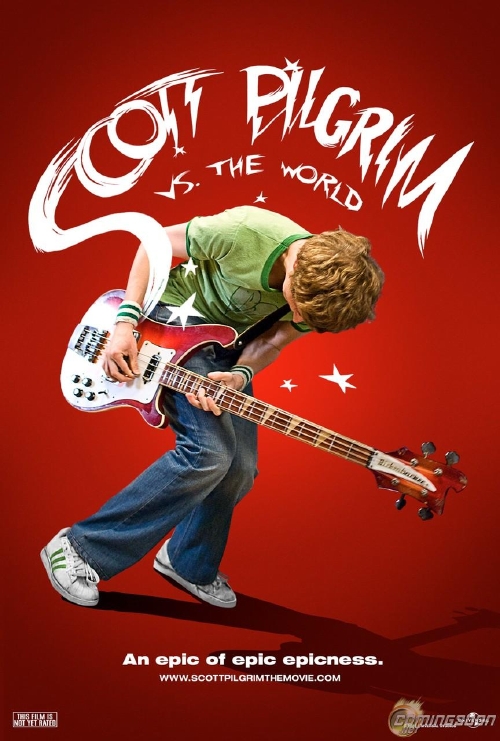
Hey Look -- It’s Another Scott Pilgrim Review!

So, my sweet husband took me to see Scott Pilgrim vs. The World for our anniversary.  I would make a pithy comment about the 12th year being “comics” but, for us, every anniversary is the comics anniversary.


So, Scott Pilgrim.  I liked it, I liked it a lot.  But that was pretty much a given.  What’s more surprising is the parts I expected to dislike didn’t bother me so much.  

You see, I love the Scott Pilgrim graphic novels.  LOVE, LOVE, LOVE.   I also love Edgar Wright.   I like Kieran Culkin, and Brandon Routh and Chris Evans.  I like Beck.  I like video games and 8 bit art.  So, most of this movie is in my wheelhouse.


Friday, August 6, 2010

Dear DC ...

Please make this --


http://purgetheory.blogspot.com/2010/07/ww-manga-blah-blah.html


-- happen. As a mom and a teen librarian, I'm telling you there is an audience for this book.


Thanks,

Sunday, March 28, 2010

Judgement Afore: Movie Trailers!

Hey Everybody --

This weeks "stuff I love" will be delayed till I'm in a better mood -- I'm getting a cold and there's not much I love right now.

Instead, let's make my bad mood work for me by getting judgmental on some movie trailers! These are all childrens' or teen books that have been adapted to film.

Thursday, March 25, 2010

Benny and Penny in The Toy Breaker

Benny and Penny in The Toy Breaker


By Geoffrey Hayes,  Toon Books

In their latest installment, Benny and Penny are faced with the problem of Cousin Bo. Bo, pushy and rude, is also a toy breaker – he winds up ripping, tearing or stealing everything the two mice play with. Today, Benny and Penny are looking for pirate loot; but can they find it while keeping Bo at bay?

Charming, whimsical art will draw readers to this book. Featuring a soft, picture-bookish sensibility, the gentle pastel colors and soft shading work well for this mild tale of playground drama. As for the story itself, it is pleasant, if not innovative. The neighborhood bully receiving comeuppance and repenting is a classic trope in kid lit, and Hayes doesn’t bring anything new to the formula. That being said, the lessons being taught are presented in a subtle, but clear, way. Kids will get the message without feeling lectured or talked down to.

I didn’t enjoy this book as much as the previous Benny and Penny books, the Big No-No and Just Pretend. I’m not sure if that is because the mash-up of picture book illustrations and comics format is less novel, or if I just wasn’t as enchanted by the story. However, parents seeking to introduce young ones to comics will rejoice at Benny and Penny’s return.

Monday, March 15, 2010

Foiled by Jane Yolen and Mike Cavallaro.

I love Jane Yolen.  She’s one of the first fantasy writers I read as a little geekling.    So, when it was first announced that she was writing a graphic novel, I was excited, but cautious. 

I shouldn’t have worried.  Foiled is a great book.  In fact, it’s so great; I’m calling it one of the best books of 2010.

Our heroine is Aliera Carstairs.  Her passion is fencing, but her dedication to the sport sets her apart from other teens.  There aren’t many fencing cliques at your average public high school.   Her other hobby is role playing games, a pastime she shares with her wheel-chair bound cousin Caroline. Aliera navigates a narrow circuit of school, fencing practice and gaming, all of her equipment in tow, including the practice foil Aliera’s mom picked up at a tag sale.  It’s a good weapon, except for the cheesy red jewel on the hilt.  

Aliera’s narrow world is shaken with the arrival of Avery.  Avery is unlike any boy Aliera has ever met.  For one thing, Avery is beautiful and super charming.   He is also way, way, way into the dissection unit in biology.   Aleria knows something is off about Avery, but agrees to go out with him anyway.  It’s while waiting for him at Grand Central Station that she learns the truth about Avery and what the deal is with that red jewel.

What makes this book magical is how the typical teen tropes – outsider girl, beautiful boy with a secret, mystical foreboding – are used in fresh and unexpected ways.   I knew going in that there was something off about Avery, but I was surprised by the direction that it took.  What I liked most about Foiled is that it is Aleria’s story, unlike a lot teen books, where the girl who is supposed to be the main character is little more than a plot point for the more interesting mysterious boy.  Yolen does drop some hints about Aliera and her family that never really get picked up on, but I’m hoping that means there’s a sequel in the works. 

As much as I love Yolen’s writing, a big part of this book’s appeal is in Mike Cavallaro’s artwork. Clean and deceptively uncomplicated, it’s a perfect match for the story.   His characters are simply drawn, but expressive.  Aliera’s scowls and sardonic half-smiles tell you a lot about her personality without a word of dialogue.   Without being too spoiler-y, I can say that the coloring in this book is not only a major plot point,  but is beautiful in it’s own right. 

This is definitely a teen book, but adults and even tweens will enjoy Aleria’s adventures.  I’m recommending it to everyone I know, so go read it! 

Stuff I Love: Sandman

So, I’m a comic book geek.

I probably read two graphic novels for every prose book.  Part of this is professional; for a long time, I was the only librarian in my system who knew anything about comics, and who would buy them.  The other part is personal – I just really like comics.

This is not surprising; a lot of librarians are comic book geeks.  We’re a geeky tribe after all, and the 9th art nerds have to represent.  But my journey into comics is a little bit different.

Or, as I tell my husband, blame Sandman.

I didn’t read comics as a kid.  As a child of the 80’s, I’m not sure there were a lot of comics to read.  Also, I was “gifted” and read high above my grade level.  My mom, on the advice of innumerable teachers, kept me on a steady diet of Newbery winners and children’s classics.    I didn’t really discover comics until I was an adult. 

One of the first I picked up was Sandman by Neil Gaiman.  I knew Gaiman’s name, kind of.  As a fan of BBC science fiction, it was sort of familiar to me.  Looking at comics as a field, his name came up a lot.  I knew that Sandman was a horror/fantasy hybrid.   I wasn’t expecting much, going into it.  I was buying books for a library collection, and just had to get a feeling for it. 

The first Sandman collection Prelude and Noctunes, gave me the kind of visceral response that I think people look for in a horror comic.  I think I would have stopped reading there, if it hadn’t been for the last story in the volume. If the horror story “24 Hours” was a punch in the stomach, “The Sound of Her Wings” was a kiss on the forehead, one of the most beautiful and moving stories that I had ever read – in prose or comics. 

I had to keep reading.  An author who could do that, who could make me tear up over feeding pigeons, needed more attention. 

Wednesday, March 10, 2010

Zeus: King of the Gods by George O'Connor

Greek gods are the new vampires. 

Or maybe it just seems that way to me, as the mother of a pre-teen with a deep love of all things Percy Jackson.  However, I have noticed that the Olympians are becoming a pop-culture trend. 
First Second is one with the zeitgeist, with their graphic-novel series Olympians, the first of which is Zeus: King of the Gods.

Zeus is a good starting point for a series about the Olympians, because not only is he their king, he started that whole “war with the Titans” that set up the Greek pantheon as we know it.
George O’Connor starts in the beginning, with Gaea and Ouranos.  O’Connor chooses to use the less familiar, more Greek, names of the gods.  This scores him points for authenticity, but may confuse readers who are more familiar with the Latinized names.   He goes through the creation of the Titans, the birth and subsequent devouring of the Olympians.  He moves quickly through Zeus’s childhood and rushes to the part we all want to see – the big war.

Adapting the story of the Greek gods to a graphic novel for kids has some unique challenges.  The Olympians liked to get it on, Zeus in particular.  O’Connor does a good job of glossing over the more salacious aspects of Zeus’s origin story, while still including some “wink, wink, nudge, nudge” moments. 

O’Connor has an angular, realistic style, which reminds me a little of Craig P. Russell.  It works fairly well with his subject matter.  I wish there was less black in his compositions.  The use of stark black for backgrounds and shadowing lessens the impact of some scenes, particularly the large format battles. 

All in all, this is a nice re-telling of Zeus’s origin story, in a more palatable format than the tomes of Greek mythology I read as a child.  I look forward to future installments in the series.   

Monday, March 8, 2010

Black Hole by Charles Burns

In 1970’s Seattle, casual sex can lead to more than just a pregnancy scare. A sexually transmitted virus, the “bug” is sweeping through the senior class, and it causes it’s carriers to mutate. Sometimes the mutations are small, a tail, a mouth on your neck. Sometimes, they’re bigger, making you something horrific. The afflicted camp out in the woods above town, but how long can they last?

It’s funny, how when you look at something for a second time, its meaning can change.

I first read Black Hole in 2006, shortly after it won the Eisner award. Back then, I read it as a stark tale of adolescence, with the mutating virus a metaphor for the uncertainty teens feel in their bodies and sexuality. I didn’t like it much. I thought it was a pretty obvious treatment of a well-traveled trope. Burns’ art (from the Chris Ware/Dan Clowes school) didn’t do much for me.

I recently re-read the book, for a presentation I’m doing, and while I’m still not a huge fan of the book, there’s more there than I thought there was.

More about the second time around with spoilers (if a 5 year old book can have spoilers)

Friday, March 5, 2010

Missile Mouse: The Star Crusher by Jake Parker


Missile Mouse is a Galactic Security Agent, charged with keeping the universe safe from the Rogue Imperium of Planets. RIP have gotten their hands on a scientist with the ability to create a doomsday device that could destroy whole galaxies. It’s up to Missile Mouse and his new partner, Hyde, to get him back and stop the RIP.


Just from that brief description, this doesn’t sound like the type of book that I would like. It has two elements that I avoid in fiction. First off, there’s talking animals, albeit alien talking animals. Missile Mouse is a mouse (duh!) and his partner appears to be some sort of hairy pig thingy. Plus there are shark men. Talking animals are a big no-no in my book. Next, that doomsday device? It’s a weaponized black hole. So called “hard” sci-fi loves black holes – they go off into innumerable pages of technobabble about the creation and maintenance of these giant suck balls – but plot and characters tend to go bye when a black hole enters the picture.

Despite the presence of two Merideth repellants, I really liked this book. Why? Well, a big part of it is Jake Palmer’s art. Palmer has an animation background, and it shows. His panels are dynamic and full of motion, and the layout is not just a progression of squares. The character designs are witty and imaginative, even those dreaded shark men. Clear, bright colors make this book really pop.

Also, Palmer doesn’t let himself get bogged down in the science part of his sci-fi. This book is really more of a space based adventure that rotates around a missing scientist. The plot is not a new one, and it might even read as trite to savvy readers. However, the fun and energy that Palmer puts into his story is infectious, and tween readers will quickly get into the spirit.

This would be a great choice for a reluctant reader in the 8-12 year old range, but I think it does have some all-ages appeal.  I'm sure Missile Mouse will have more adventures, and I am looking forward to them.

Monday, March 1, 2010

Locke and Key: Welcome to Lovecraft by Joe Hill and Gabriel Rodriguez

I am so far behind the curve with this series, it’s not even funny. Here’s the thing. I’m an enthusiastic consumer of horror novels, but I’m not a big fan of horror comics. It seems strange, but something about the graphic element of a comic book makes everything too… visceral for me. So horror comics often get the short end of the stick when it comes to my reading.

However, I really wish that I had looked at Locke and Key sooner, because it is fantastic.

The Locke children are attempting to recover from the horrific murder of their father; their mom and uncle have moved them across the country to the Keyhouse, in Lovecraft, MA. Bode, the youngest, discovers some amazing secrets about the Keyhouse, and makes friends with a mysterious being living down the well. The being seems friendly, but it has secrets, and has more to do with the Locke family’s troubles than they know.

This book grabs you right from the start and doesn’t stop. Although there is some blood and gore, the book really trades on suspense and fear of the unknown. The Keyhouse is full of mystery, and Hill does a great job of building the suspense. I also really like how he manages to make the Locke kids feel real. Bode in particular seems like a real little kid, and his actions move the book forward. Each has a different way of dealing with the changes in their lives, and each feels authentic.

Art in comics is sometimes just a matter of taste, and Gabriel Rodreguez’s art doesn’t really suit me. It works fine for the story (although I wish he was a little more judicious with his shadowing) I just didn’t care for it. Jay Foto’s colors really work for the story, as they have just the right amount of grey to make everything atmospheric, but not too dark.

I am eagerly awaiting the next volume in this series, and hope that if if they do make a Locke and Key movie, they don’t totally screw it up.